When Worry Takes Over: Practical Strategies for Working With Adolescents With Anxiety
When Worry Takes Over: Practical Strategies for Working With Adolescents With Anxiety
Stress is part of being human—and certainly a part of adolescence.
Anxiety in Adolescents Does Not Always Look Like Anxiety.
As Mental Health Clinicians, we often imagine anxiety as visible worry: nervousness, fear, racing thoughts, or panic.
In adolescents, the picture can be far more complicated.
Changes in their bodies and hormones, shifting relationship dynamics, along with demanding academic expectations; the identify of an adolescent begins to take shape.
As adolescent shifts their focus to a need for social belonging and gaining independence; the diagnostic and assessment challenge for clinicians means recognizing what differentiates a "worried teenager" from "an anxious adolescent."
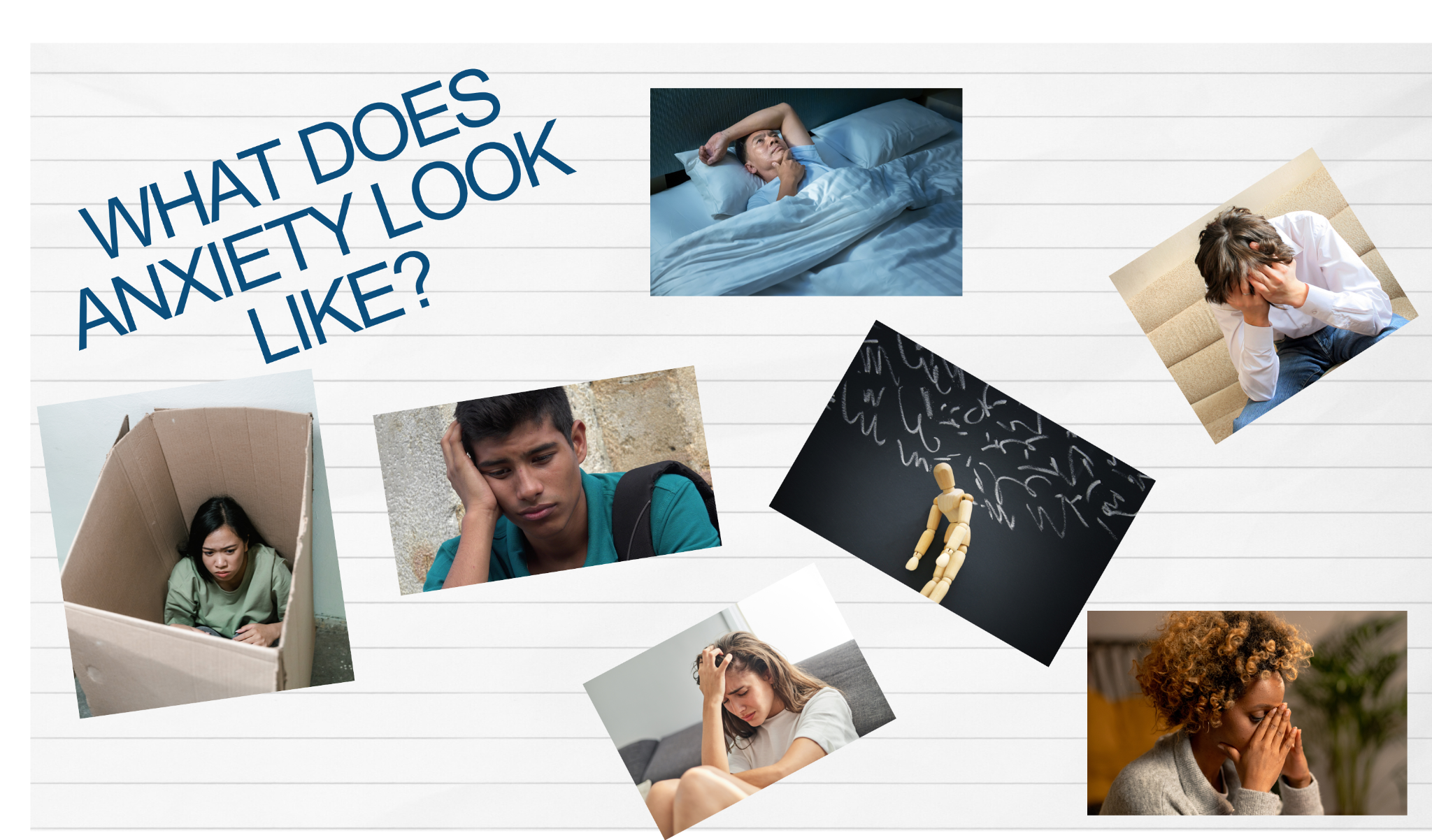
Anxiety may appear behaviorally through social withdrawal, avoiding classroom participation, refusing school, or choosing activities that minimize social interaction.
It may show up cognitively and emotionally as excessive worry, fear of judgment, perfectionism, reassurance-seeking, detachment, or a persistent sense that something is about to go wrong.
And sometimes anxiety speaks through the body before an adolescent has words for what is happening:
Stomach pain,
Dizziness,
Trembling,
Sweating,
Rapid heartbeat,
Sleep difficulty,
Nausea,
Feeling frozen or unable to act.
Normal Stress or Clinical Anxiety?
Learning to recognize and assess adolescent anxiety across behavioral, emotional, cognitive, and physiological presentations is an especially important skill for mental health clinicians.
Not every worried teenager has an anxiety disorder.
Mental Health Clinicians may need to consider when the adolescent anxiety has moved beyond an adaptive response and has begun to interfere with functioning.
Some questions to consider:
Is worry excessive or difficult to control?
Is fear leading to persistent avoidance?
Is anxiety interfering with school attendance or performance?
Is the adolescent withdrawing from friendships, activities, or experiences they previously enjoyed?
Are physical symptoms repeatedly appearing without another clear explanation?
Is anxiety shaping the young person’s choices rather than simply accompanying them?
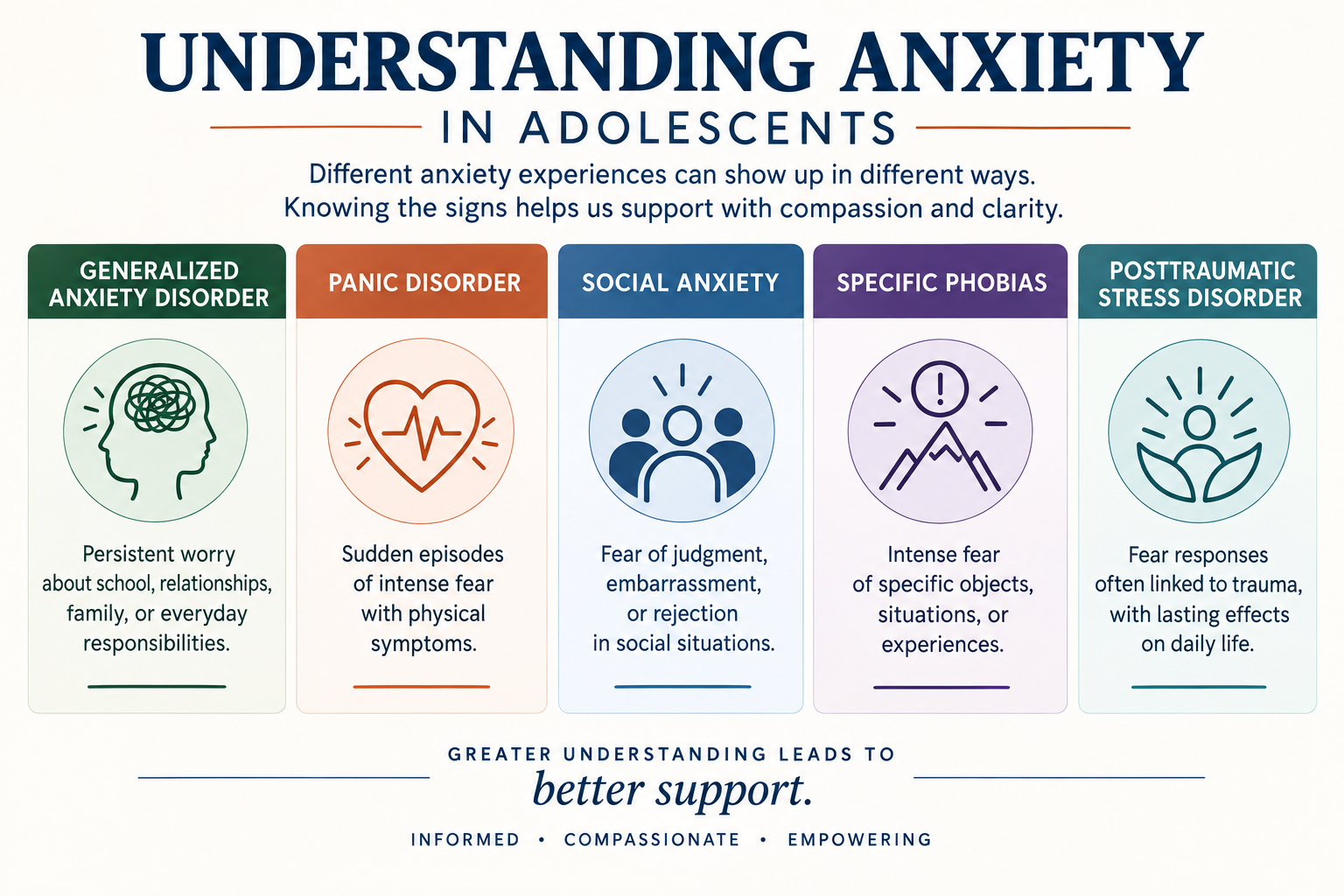
Understanding the different faces of adolescent anxiety, helps Mental Health Clinicians to determine a more precise map for onboarding assessment and offering interventions for practical solutions to build a toolbox that adolescents will actually use.
Practical Interventions for Clinicians Working With Adolescents
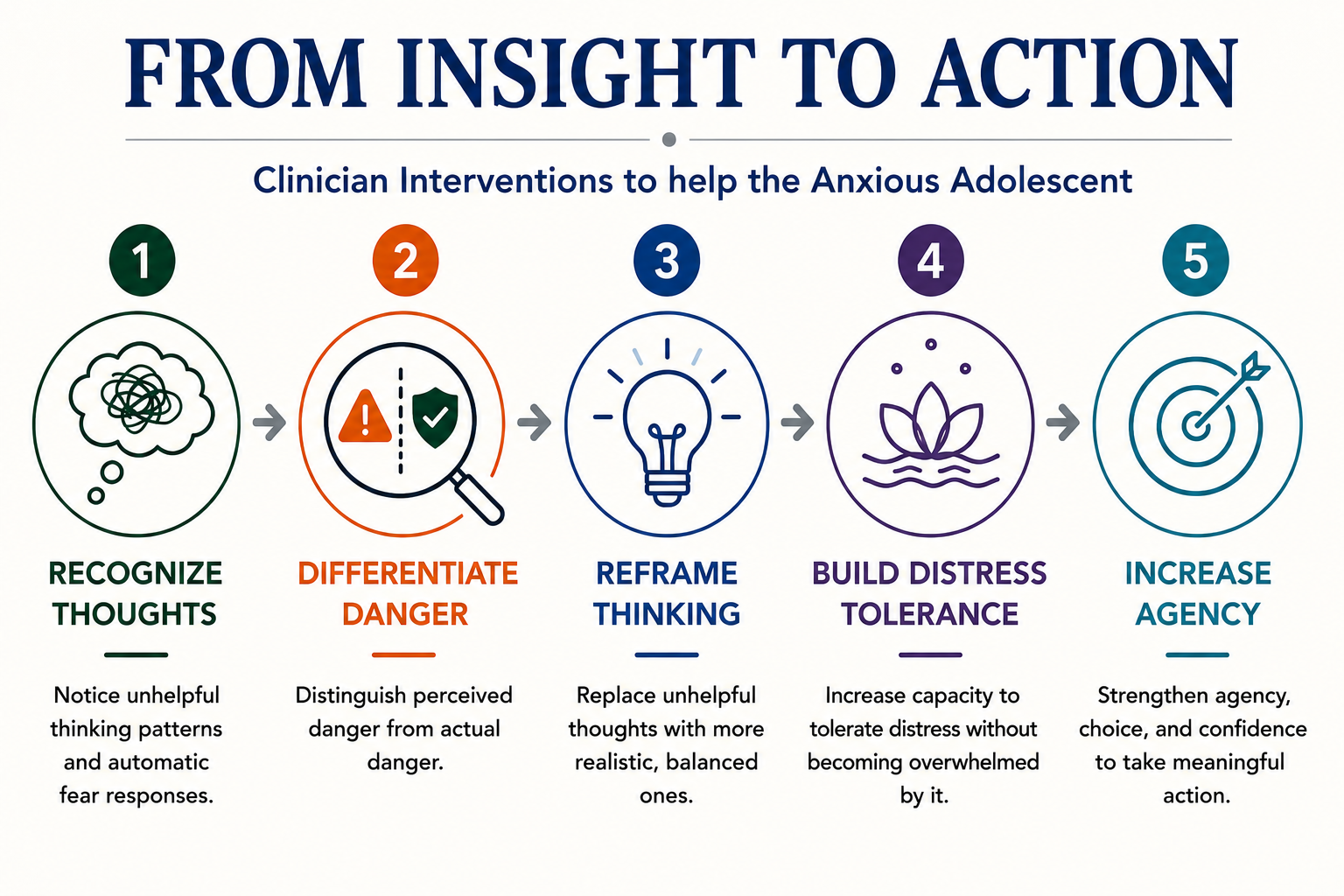
Helping Adolescents Build a Different Relationship With Anxiety is how Mental Health Clinicians can create therapeutic alliance and rapport with the Anxious Adolescent.
By exploring how Adolescent Anxiety drives behaviors, thought processes, and somatic body responses can help the anxious teenager return to the present moment, reconnect with the body, and experience a greater sense of safety and control.
An anxious adolescent may understand intellectually that they are safe while their nervous system is loudly insisting otherwise.
So then the shift in anxiety treatment for adolescents means incorporating:
Reducing intensely self-critical thoughts, perfectionistic tendences, or dependence on external reassurance.
Utilizing grounding strategies to reduce panic and physically alarming symptoms such as rapid heartbeat, dizziness, shortness of breath, shaking, nausea, numbness, or fears of losing control.
Practicing emotional regulation skills to build confidence when speaking in class, eating around others, asking a question, or attending an event.
Informing and coordinating communication strategies with school-based staff and caregivers to build structured supported ways to reduce the impact of intrusive memories, hypervigilance, emotional withdrawal, sleep difficulties, concentration problems, and changes in mood.
Moving from avoidance towards resilience by preparing for uncomfortable experiences to create predictability through routine, clear expectations for assignments, and plan for transitions as the anxious adolescent moves through the day.
The clinician work of a Mental Health Therapists lives somewhere in between: helping anxious adolescents discover that difficult sensations, uncertain situations, and anxious thoughts can be navigated without automatically retreating from life.
To remain engaged while developing the skills necessary to navigate discomfort.
Want to help Adolescents Build a Different Relationship With Anxiety as a mental health clinician?
Knowing a coping skill exists and being able to access it during distress are two very different things.
That is why practical, developmentally accessible strategies matter.
Shelly Thome of Focus Counseling explores approaches clinicians can incorporate into their work with adolescents, including grounding techniques, worry stones, sensory interventions, calm-down bottles, anti-stress kits, meditation, breathing exercises, progressive muscle relaxation, visualization, mindfulness, and other coping strategies.
These tools create opportunities to help adolescents understand their internal experience while experimenting with ways to regulate it.
Just as importantly, they can make treatment more concrete and offer how to incorporate school-based support to fully resolve the clinical picture.
A Practical Training for Clinicians Working With Adolescents
Strategies for Working with Adolescents with Anxiety is designed for professionals who want a stronger foundation for recognizing anxiety and a larger collection of practical interventions they can bring into clinical and school-related settings.
Participants will explore how to:
describe common anxiety disorders affecting adolescents,
differentiate normal stress from clinical anxiety,
recognize behavioral, emotional, cognitive, and physical symptoms,
identify risk factors associated with adolescent anxiety,
understand evidence-based treatments and school-based supports,
demonstrate grounding and coping strategies, and
strengthen emotional regulation and resilience-building interventions.
The course also considers the interaction between biological vulnerability and environmental experience—the familiar nature-and-nurture question that is rarely an either/or proposition.
Adolescent anxiety is complex.
Our response to it should be thoughtful enough to match.
Continue Your Learning
Join Shelly Thome, LPC, CCTP, CCTSI, CTMH, CCFP for Strategies for Working with Adolescents with Anxiety, an on-demand interactive continuing education course hosted by Therapaideia Training Collective.
Be the first 20 to register will receive 25% off with the code: ADOL25.
This course is designed for educators, counselors, youth workers, and caregivers seeking practical ways to recognize and respond to anxiety in young people.
It includes 16 resources for client sessions so you can bridge clinical knowledge to practical application with your clients.
Participants will explore how to:
Recognize common anxiety presentations in adolescents
Differentiate normal stress from clinical anxiety
Identify behavioral, emotional, cognitive, and physical symptoms
Use grounding and coping strategies during anxiety episodes
Strengthen emotional regulation and resilience
Understand evidence-based treatments and school-based supports
Adolescent anxiety rarely walks into the room wearing a name tag.
The goal is not to eliminate every anxious feeling. It is to help adolescents build more capacity, more flexibility, and more choice in what happens next.
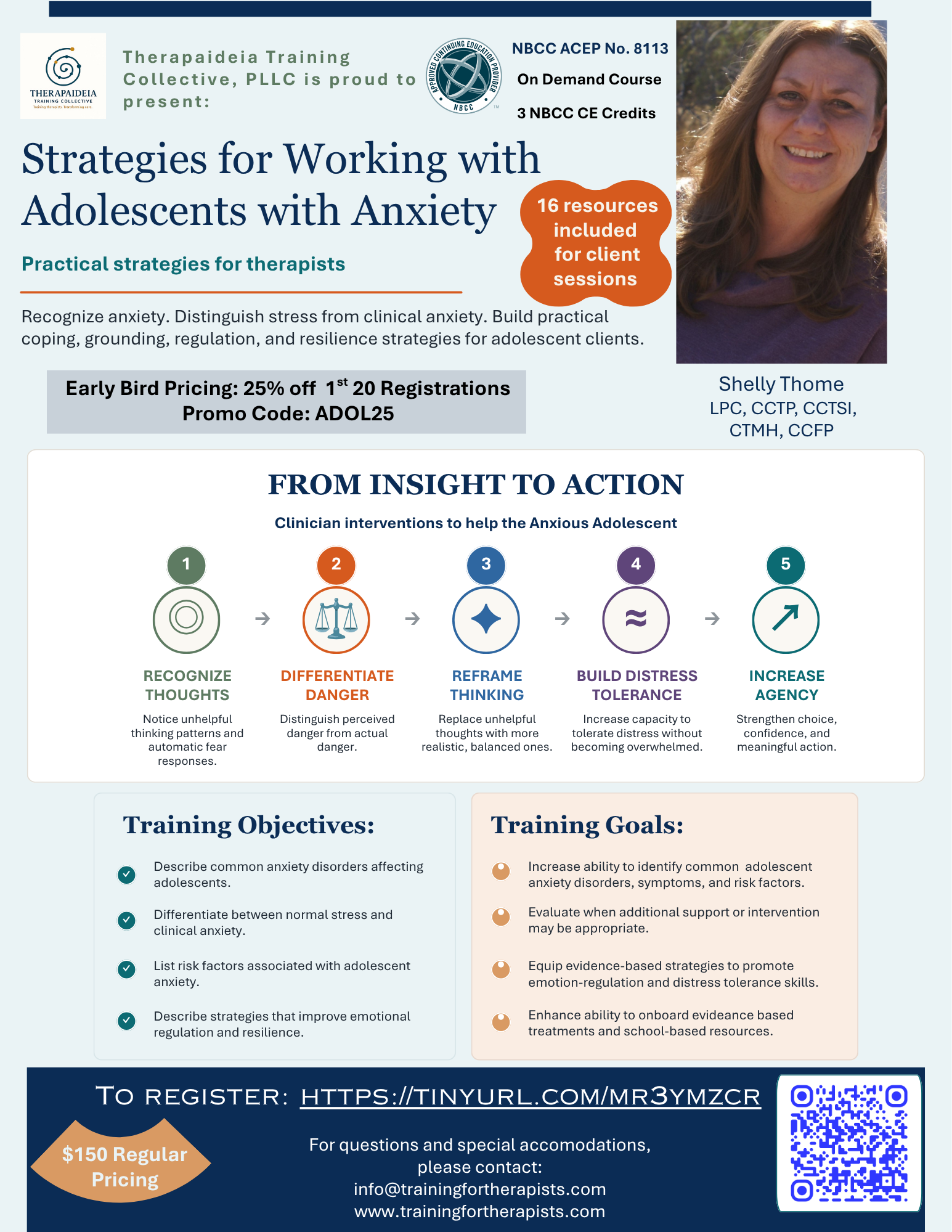
Strengthen your ability to recognize adolescent anxiety—and expand the practical tools you can offer when worry begins getting in the way of school, relationships, confidence, and everyday life.
🎓 3 NBCC CE Credits
💻 On-Demand Course
🏛️ Therapaideia Training Collective | NBCC ACEP No. 8113
Learn more: https://trainingfortherapists.com/adolescent-anxiety-ce