Is Advanced Trauma Training Worth the Investment?
Beyond the Chair: Therapaideia's space for thoughtful reflection on the role of the evolving therapist.
Why Advanced Trauma Training Is Worth the Investment for Therapists
Advanced trauma work asks more of clinicians than simply learning new techniques.
When clients present with complex trauma, dissociation, attachment wounds, preverbal experiences, or implicit memory, even experienced therapists can encounter moments when standard treatment approaches are not enough.
And in those moments, what matters most is not effort or insight—it is clinical capacity.
This is where advanced trauma training becomes more than continuing education. It becomes an investment in clinical confidence, case conceptualization, and the ability to work effectively with some of the most complex presentations in psychotherapy.
When Standard Approaches Aren’t Enough
Many foundational trauma treatments have transformed the field and provide essential tools for clinical work. However, complex trauma often requires clinicians to thoughtfully expand beyond standard protocols.
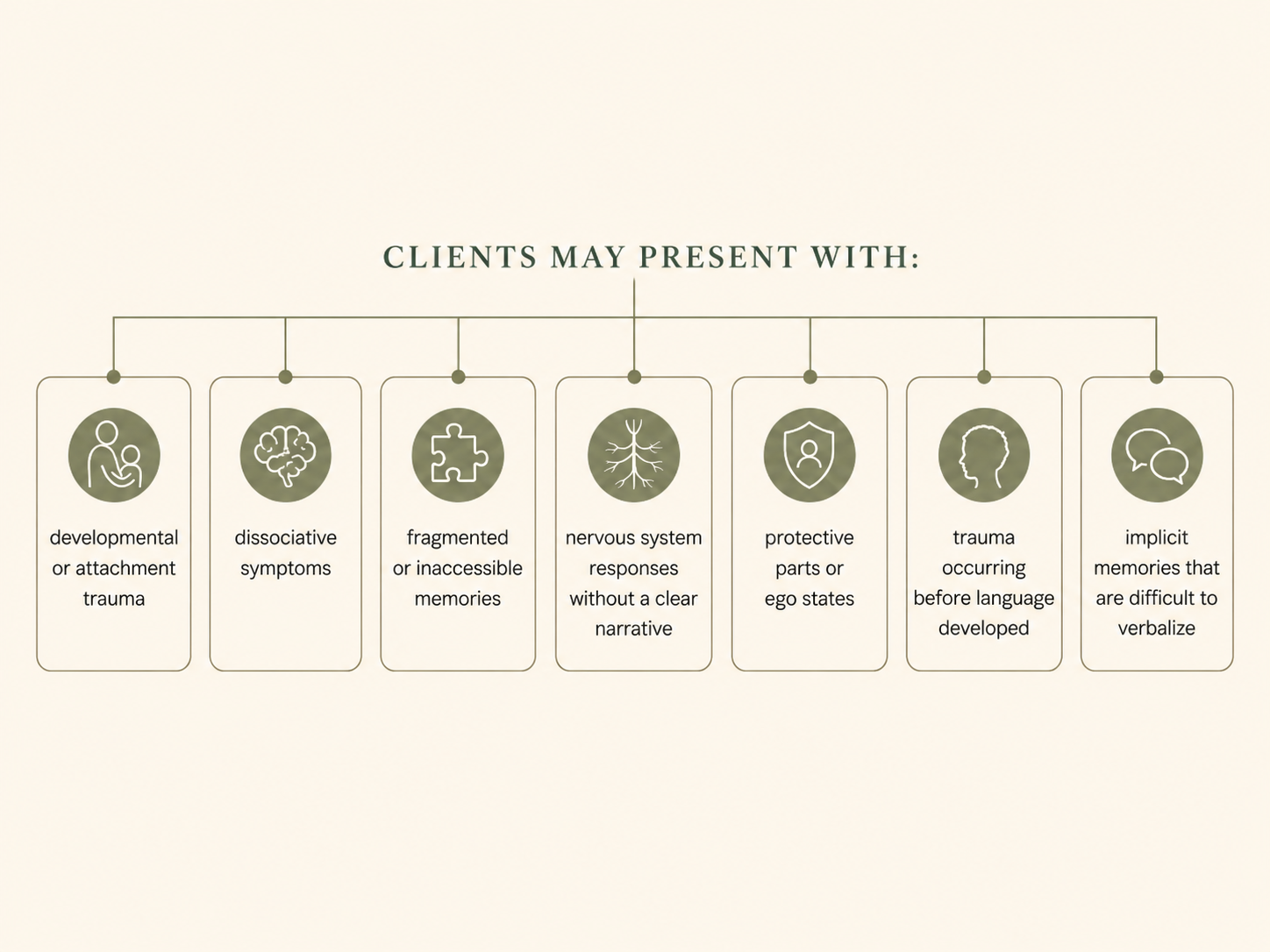
Clients may present with:
developmental or attachment trauma
dissociative symptoms
fragmented or inaccessible memories
nervous system responses without a clear narrative
protective parts or ego states
trauma occurring before language developed
implicit memories that are difficult to verbalize
These are not rare presentations in trauma practice—they are increasingly common.
And they require clinicians to think beyond, “What intervention do I use?”
Instead, treatment often requires deeper clinical questions about development, attachment, nervous system organization, dissociation, implicit memory, and readiness for processing.
Advanced trauma training helps clinicians develop frameworks that bring clarity to complexity—so you are not improvising in uncertainty, but working from grounded clinical understanding.
Working With Trauma That Exists Beyond Words
Some of the most significant traumatic experiences occur before clients have language to describe them.
Early attachment experiences, developmental trauma, and preverbal experiences may live primarily through sensation, emotion, relational patterns, and nervous system responses rather than narrative memory.
This is often where therapy feels the most challenging—and the most important.
Advanced trauma training expands a clinician’s ability to recognize and work with implicit, somatic, and relationally stored trauma—helping bridge the gap between what clients feel and what they can say.
Moving From Knowing to Clinical Confidence
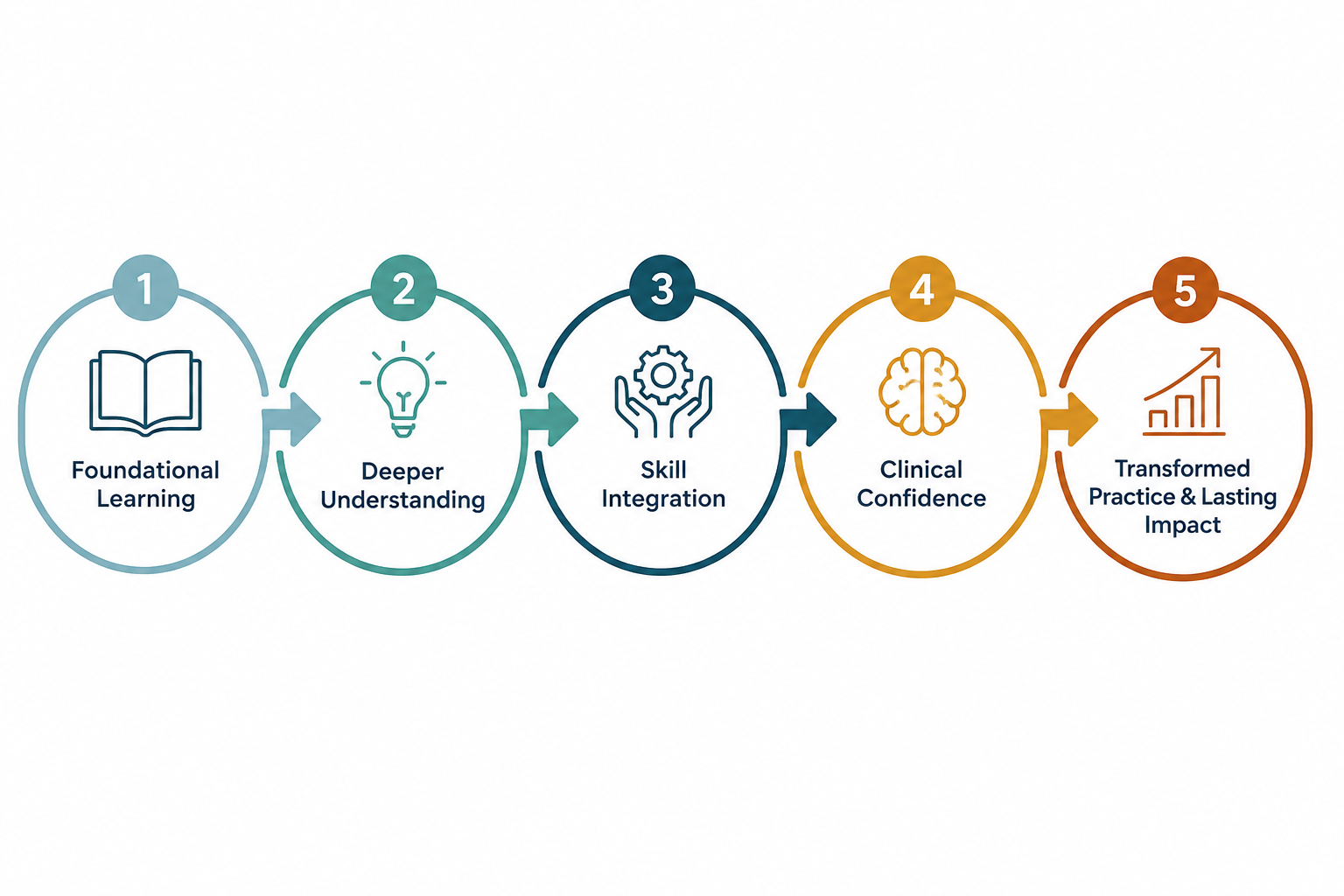
Clinical growth does not happen through information alone.
It develops through integration, practice, and experiential learning.
High-quality trauma trainings often include opportunities to engage with material in applied ways—allowing clinicians to move from conceptual understanding to embodied clinical skill.
This shift is critical in trauma therapy, where timing, pacing, and attunement can significantly influence treatment outcomes.
For clinicians working with complex trauma, experiential learning is often the point where things click—and confidence begins to replace hesitation.
The Return on Investment in Clinical Practice
The value of advanced trauma training extends far beyond continuing education credits.
The skills developed can influence hundreds of future clinical sessions and shape long-term professional identity.
Clinicians often leave advanced training with greater capacity to:
conceptualize complex trauma presentations
recognize dissociation and protective responses
understand implicit and preverbal trauma
adapt treatment approaches for complex cases
integrate somatic, attachment, and parts-based perspectives
pace trauma processing more effectively
remain grounded in the face of clinical complexity
The return on investment is not simply additional knowledge.
It is greater clinical depth, flexibility, and confidence in the room with your most complex clients.
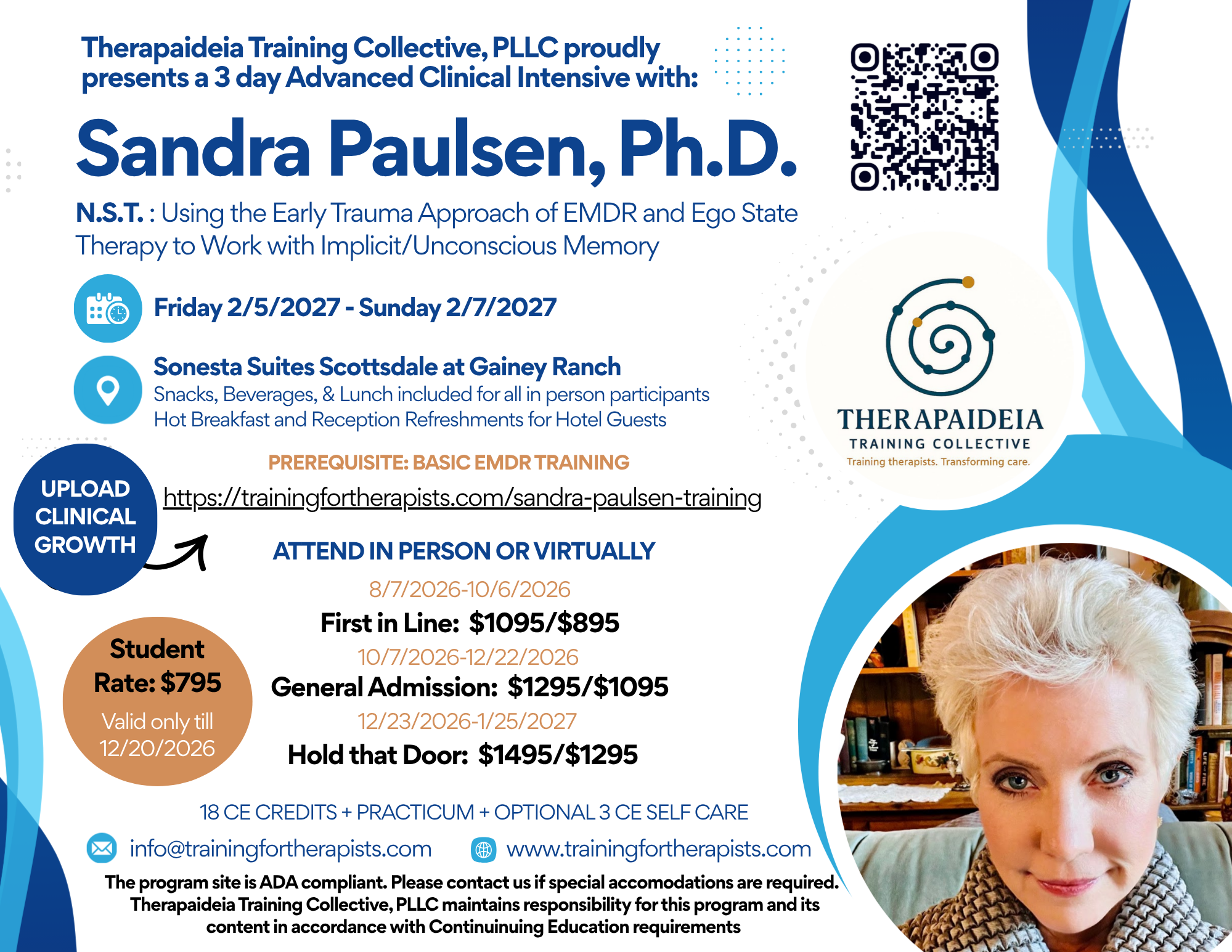
A Note on Sandra Paulsen’s N.E.S.T. Training
One example of this level of integrative, advanced trauma education is Sandra Paulsen’s Neuroaffective Embodied Self Therapy (N.E.S.T.) training.
This training brings together EMDR Therapy, neuroaffective development, somatic approaches, Ego State Therapy, and attachment-focused work into a deeply integrated clinical framework.
It reflects a broader evolution in the field toward developmentally informed, neurobiologically grounded approaches to complex trauma—especially when working with dissociation, implicit memory, and early attachment disruption.
For many clinicians, training at this level represents a shift from treating symptoms to understanding the architecture of trauma itself.

Making Advanced Training More Accessible
We also recognize that professional development is a significant investment.
Between licensure requirements, supervision, consultation, continuing education, and the realities of clinical practice, advanced training can feel financially out of reach.
For this reason, many training programs now offer payment plans or flexible registration options to support clinician access.
The goal is simple: reduce barriers so clinicians who are ready to deepen their trauma work can do so without unnecessary delay.
Making Advanced Training More Accessible
Advanced trauma training may be especially valuable if you:
work with complex PTSD or developmental trauma
provide trauma-focused psychotherapy
encounter dissociation or fragmentation in your clinical work
work with attachment trauma
are interested in implicit or preverbal memory
integrate somatic or parts-based approaches
want greater confidence treating complex trauma
are ready to deepen your clinical specialization
If you often find yourself thinking, “I understand what is happening, but I need more ways to work with it,” this level of training is often the next step forward.
Investing in the Clinician You Are Becoming
The strongest professional development does more than teach new information.
It changes what we notice.
It changes how we understand our clients.
It changes how we pace treatment and make clinical decisions.
It changes our ability to stay grounded when trauma becomes complex.
And over time, it changes the clinician we become in the room.
Advanced trauma training is ultimately an investment in clinical capacity—and in the clients who will experience the difference that capacity makes.
Invest in Your Clinical Growth
Choose training that deepens your understanding, expands your clinical flexibility, and supports the long-term development of your trauma work.